Why Latin
Our syllabus is broadly based on the National Curriculum core subjects:
- English
- Maths
- Humanities (History & Geography)
- Maths
- Physical Education & Swimming
- Music, Dance, Drama
- Physical Education & Swimming
- Spanish
- Physical Education & Swimming
- Religious Education & PSHE
- Forest School
Translating Latin demands precision, patience, and creativity. Each sentence holds layers of meaning that reveal themselves only through careful attention and analysis. This process cultivates critical thinking, depth of focus, and an appreciation for nuance—skills that few other disciplines refine as effectively. Latin vocabulary strengthens understanding of English and enhances communication skills, while classical texts illuminate the origins of modern ideas, politics, and art. Far from being mechanical or rigid, translation is an act of interpretation and problem-solving that engages the intellect and imagination at every step.
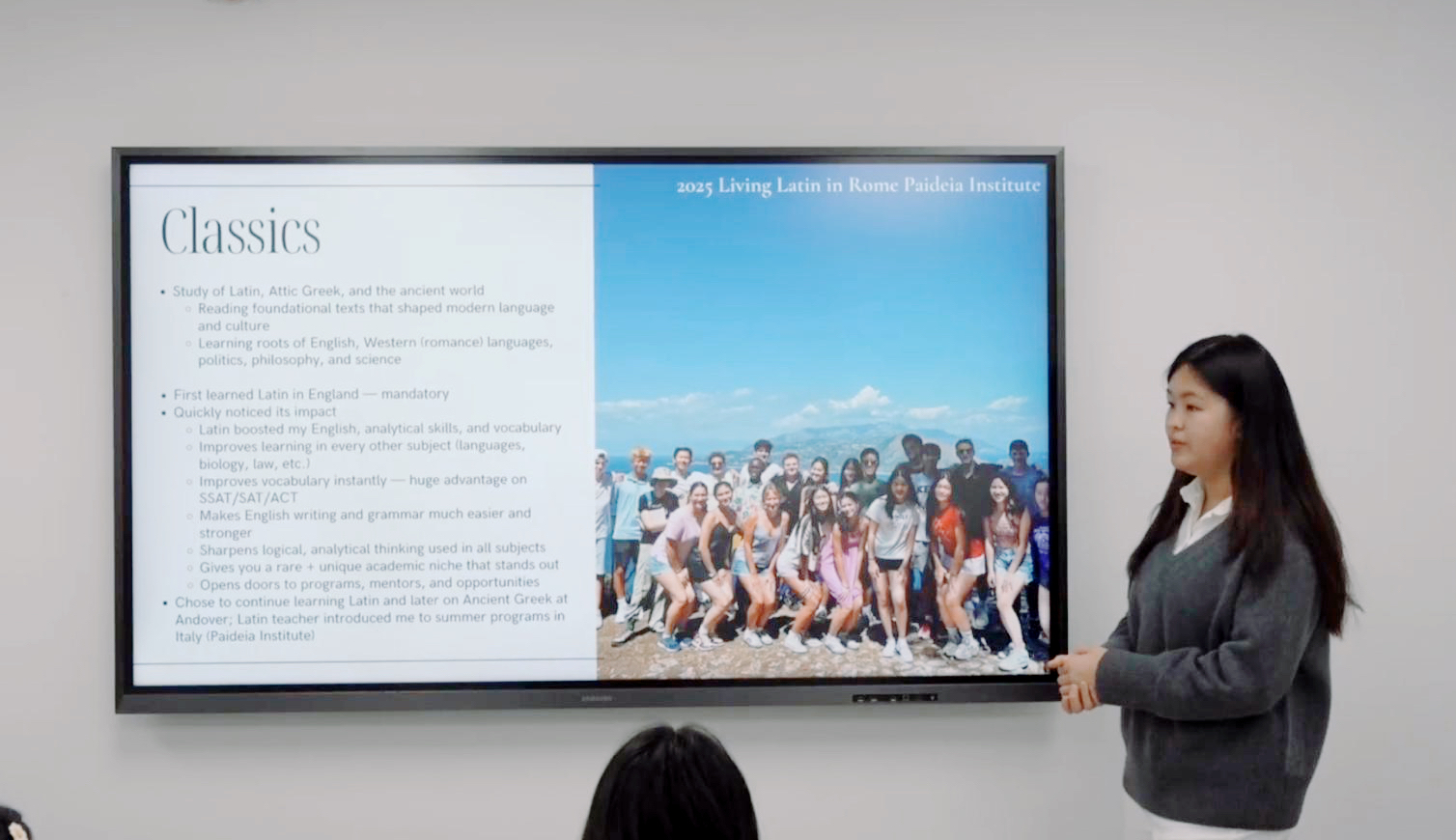
Latin builds skills that extend far beyond language learning: it sharpens vocabulary and grammar, improves reading comprehension, strengthens logical thinking, and deepens students’ general understanding of science, history, and literature. Through storytelling, mythology, and hands-on linguistic exploration found in the Classics, students will learn to think carefully, recognize patterns, and approach challenges with more confidence.
Middle school is the ideal time to nurture these habits—which exposure to the Classics can provide. This is an age when students are forming academic identities and exploring interests as independent learners. Additionally, for students who pursue Classics in competitive high school or beyond, this early exposure provides a significant head-start as they enter their classrooms with stronger skills, greater confidence, and a deeper connection to the material. But even for those who take different academic paths, studying Latin strengthens discipline, focus, and overall literacy that will serve them in any field they pursue.